



On a Thursday night in April, NRLW State of Origin Game 1 drew 980,000 viewers on Channel Nine. AFL's Collingwood versus Hawthorn drew 768,000 on Channel Seven that same night. Women's sport won the ratings. The next morning though, the coverage looked exactly like it always does.
Despite women's sport comfortably winning the ratings the night before, the May 1 CODE Sports newsletter still led heavily with AFL, men's boxing, men's NRL, golf, cricket and Super Rugby coverage.
Hero images. Analysis. Multiple feature stories. Follow-up angles. The full editorial treatment.
NRLW State of Origin, the highest-rating game of the night, was pushed into a small bullet point further down the page under "More NRL Coverage."
Not the lead story. Not a feature. They didn’t even include the match score.
This wasn't a one-off oversight or an unlucky editorial call. It reflected something much bigger: women's sport winning the night while parts of sports media still treated it like a side show.
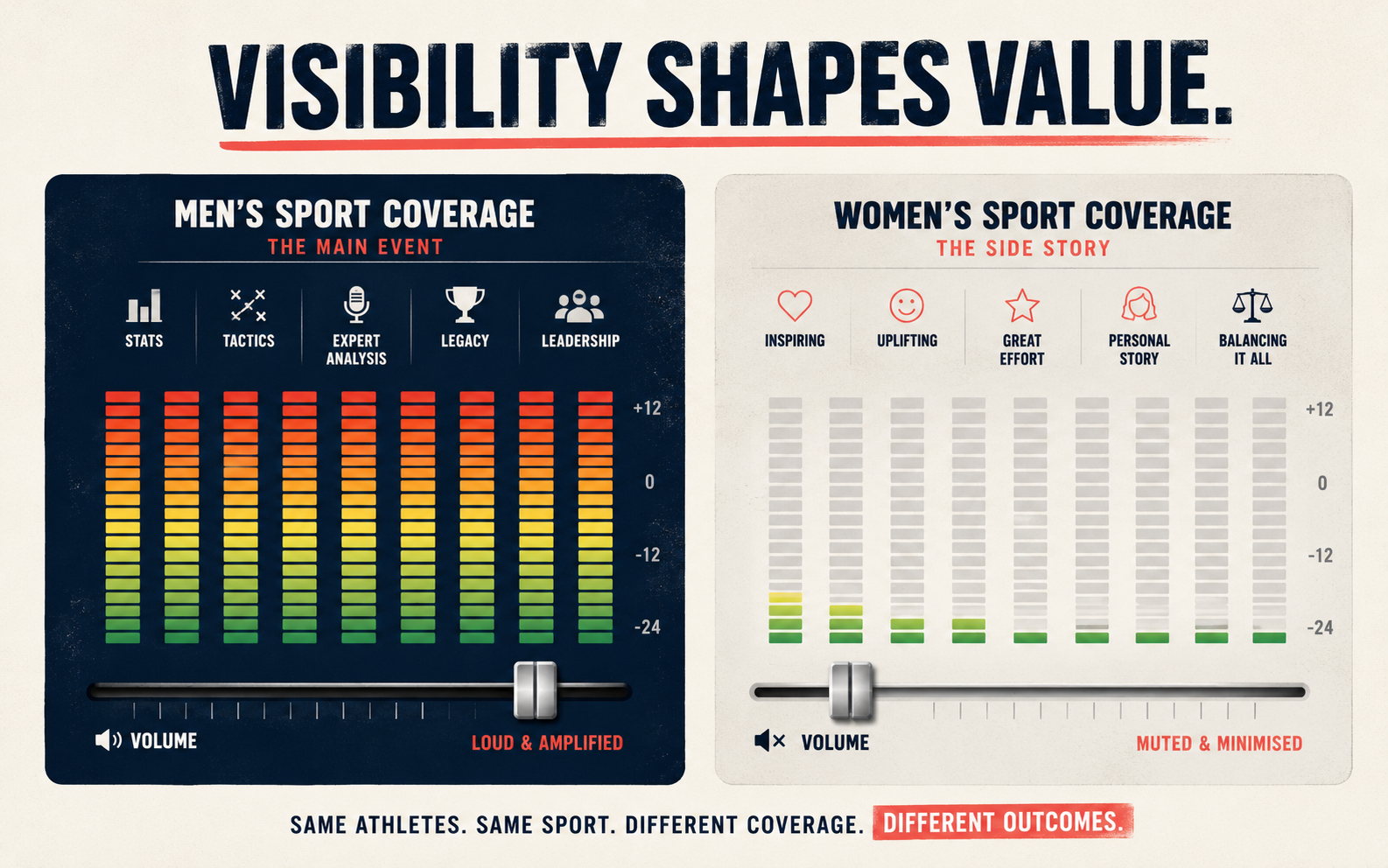
Women's sport is already holding its own.
The April 30 result wasn't a random spike. It was another sign of something that's been building for years:
- The 2025 NRLW grand final averaged 1.33 million viewers - up 42.7% year-on-year. Season viewership was up 45% overall. Grand final attendance has grown 417% since 2021.
- AFLW recorded its highest-streamed season ever in 2024: 132 million streaming minutes, its fourth straight year of audience growth.
- Super Netball's 2024 season was the most-watched in the competition's history - 210 million minutes streamed, fourth consecutive year of growth. The 2025 Grand Final pushed viewership up another 60%.
- The Matildas' 2023 World Cup semi-final against England remains the most-watched broadcast in Australian history, peaking at 11.15 million viewers.
AND THE LIST GOES ON.
The audience isn't "coming". We’ve been here for a long old while now.
Quite frankly, we're getting fed up because it's hard not to wonder... at what point does coverage stop reflecting the problem and start reinforcing it?
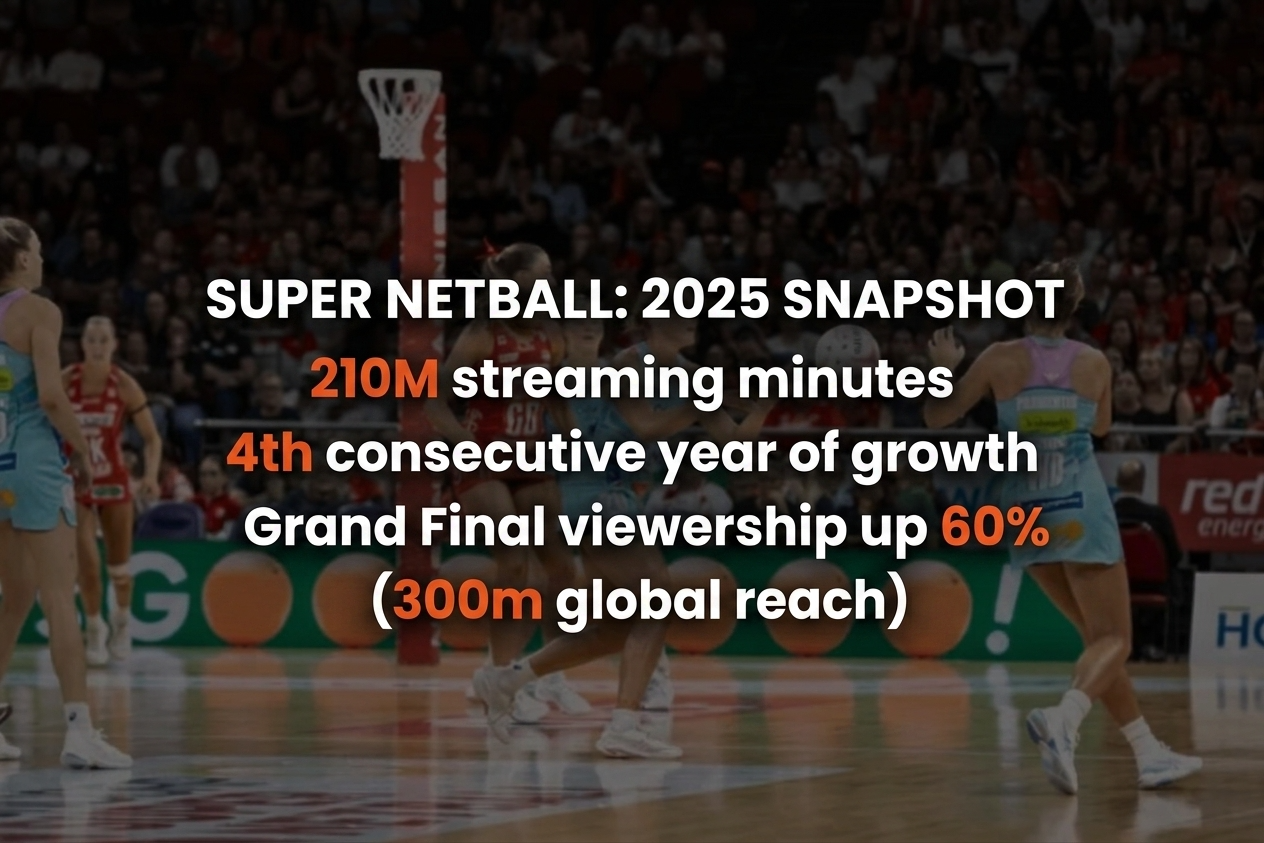
At what point does coverage stop reflecting the problem and start reinforcing it?
What the coverage still looks like
I analysed 83 daily editions of CODE Sports' newsletter from April 6 to May 18, 2026, one of Australia's most-read sports publications.
Across all the subject lines, guess the percentage women's sport accounted for? Roughly 8% of content.
For context, women make up around 40% of registered sports participants in Australia.
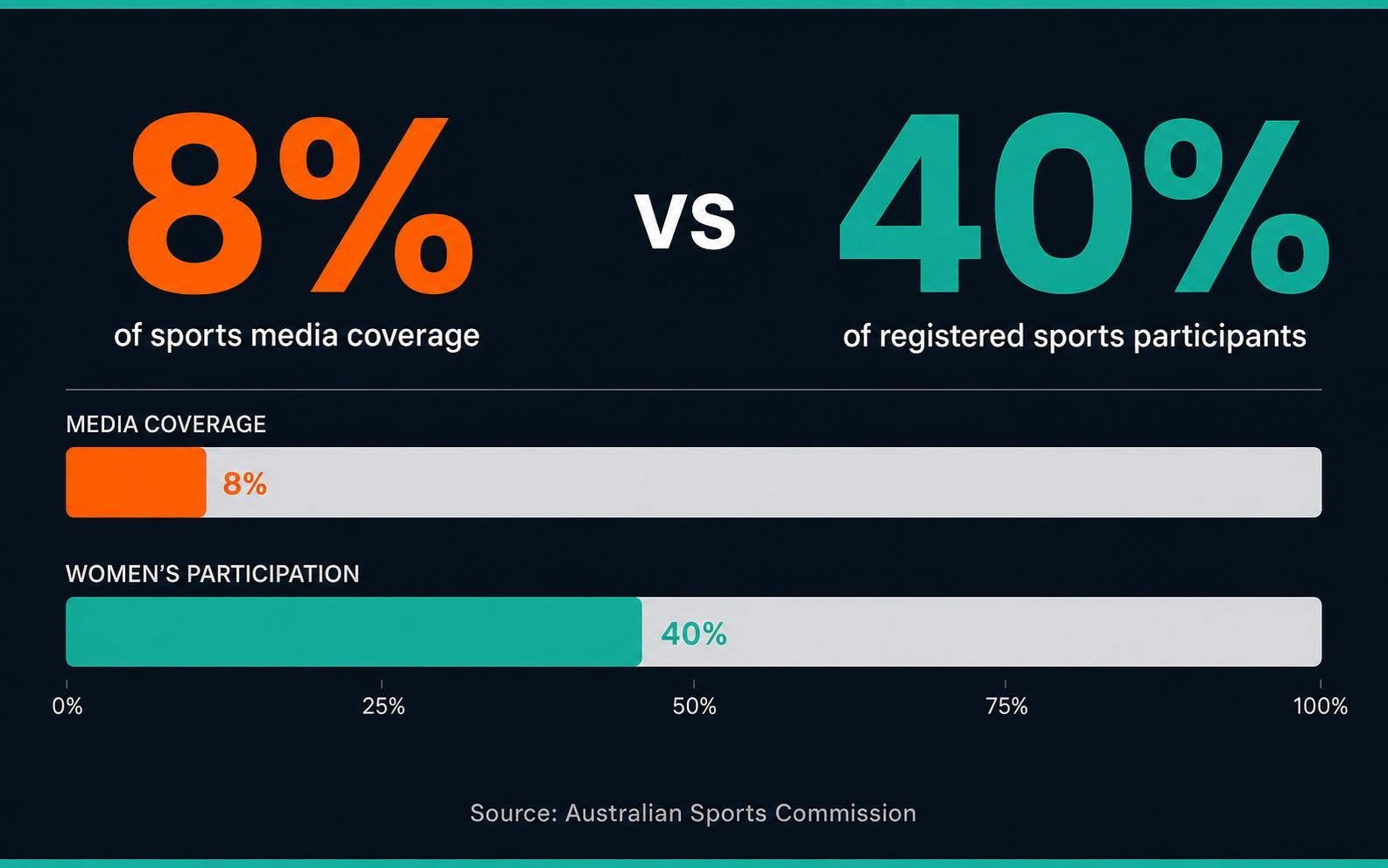
Once you see it, it's hard to unsee
What that looks like in practice: May 1, 2026. The night before, NRLW State of Origin had outrated AFL on national television. The next morning's newsletter told a very different story.
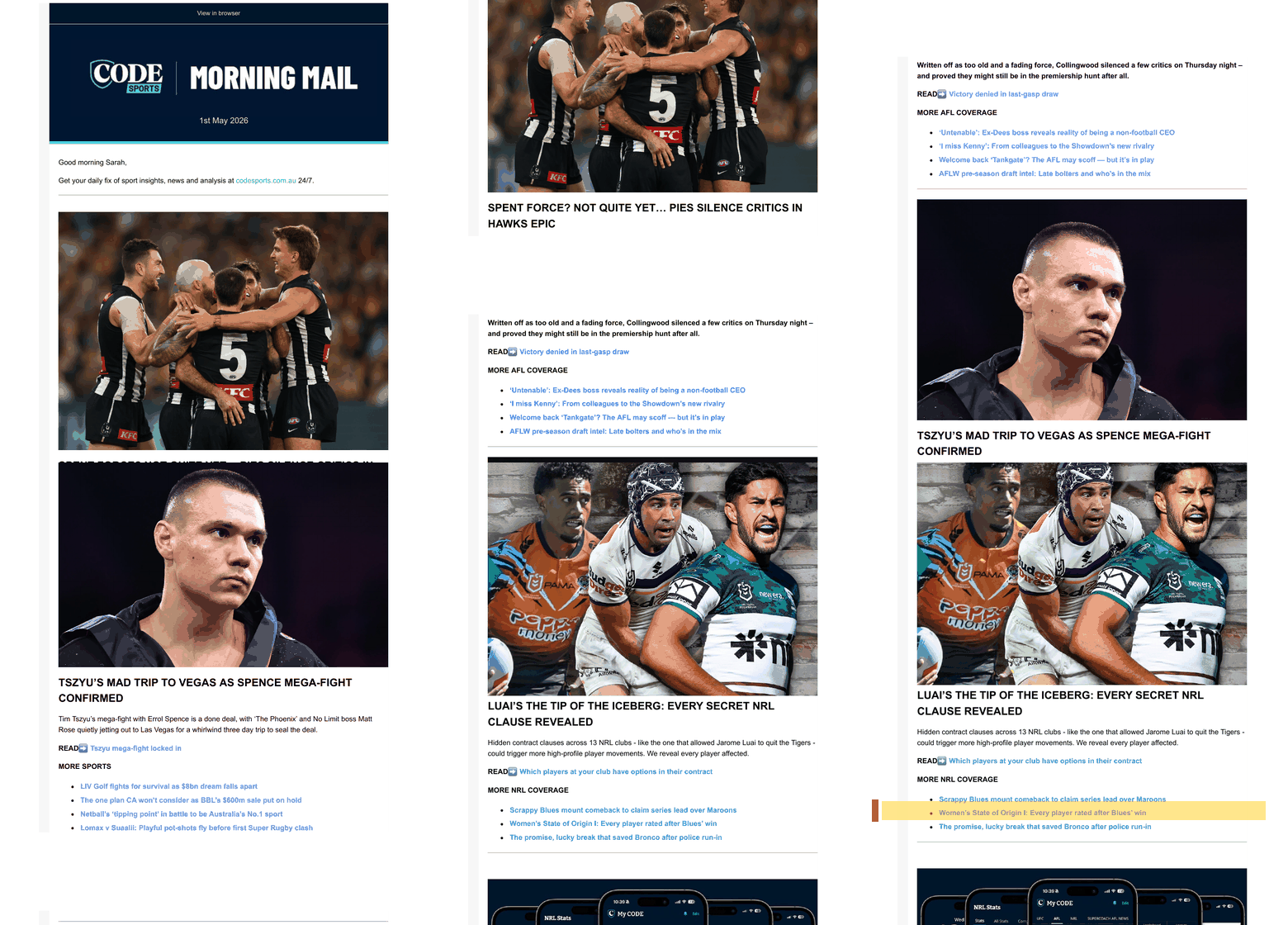
CODE Sports Morning Mail led with Collingwood. Full hero image. Big headline. Multiple linked AFL stories underneath.
The NRLW State of Origin result appeared further down as a bullet point under "MORE NRL COVERAGE", below a men's match report and a human-interest story. Its title? Women's State of Origin I: Every player rated after Blues' win. For the highest-rating game of the night, the editorial treatment was essentially: nothing to see here.
The first bit reads, "The NSW Blues have taken a 1-0 series lead over the Queensland Maroons in the State of Origin opener, on the back of a field goal in the dying minutes and a try on the buzzer." No mention of the final score, no highlights or lowlights. Just a list of ratings. To say it's reductive is being generous.
Readers noticed.
And readers noticed. Comments under the NRLW article included variations of:
- "What was the score?"
- "I didn't even know it was on."
- "Would like to see the score, not everyone watched."
Meanwhile, an even more insidious double standard was taking place. When CODE runs NRL articles with player ratings, fans consistently rated players above the expert scores.
People were engaged. Invested. Rewarding performances they'd watched and cared about.
"What was the score?"
"I didn't even know it was on."
"Would like to see the score, not everyone watched."
Even when women's sport gets covered, it's often framed differently.
There's another issue sitting inside the visibility gap itself.
A large chunk of the women's sport stories that appeared during the six weeks I analysed weren't really about sport performance at all.
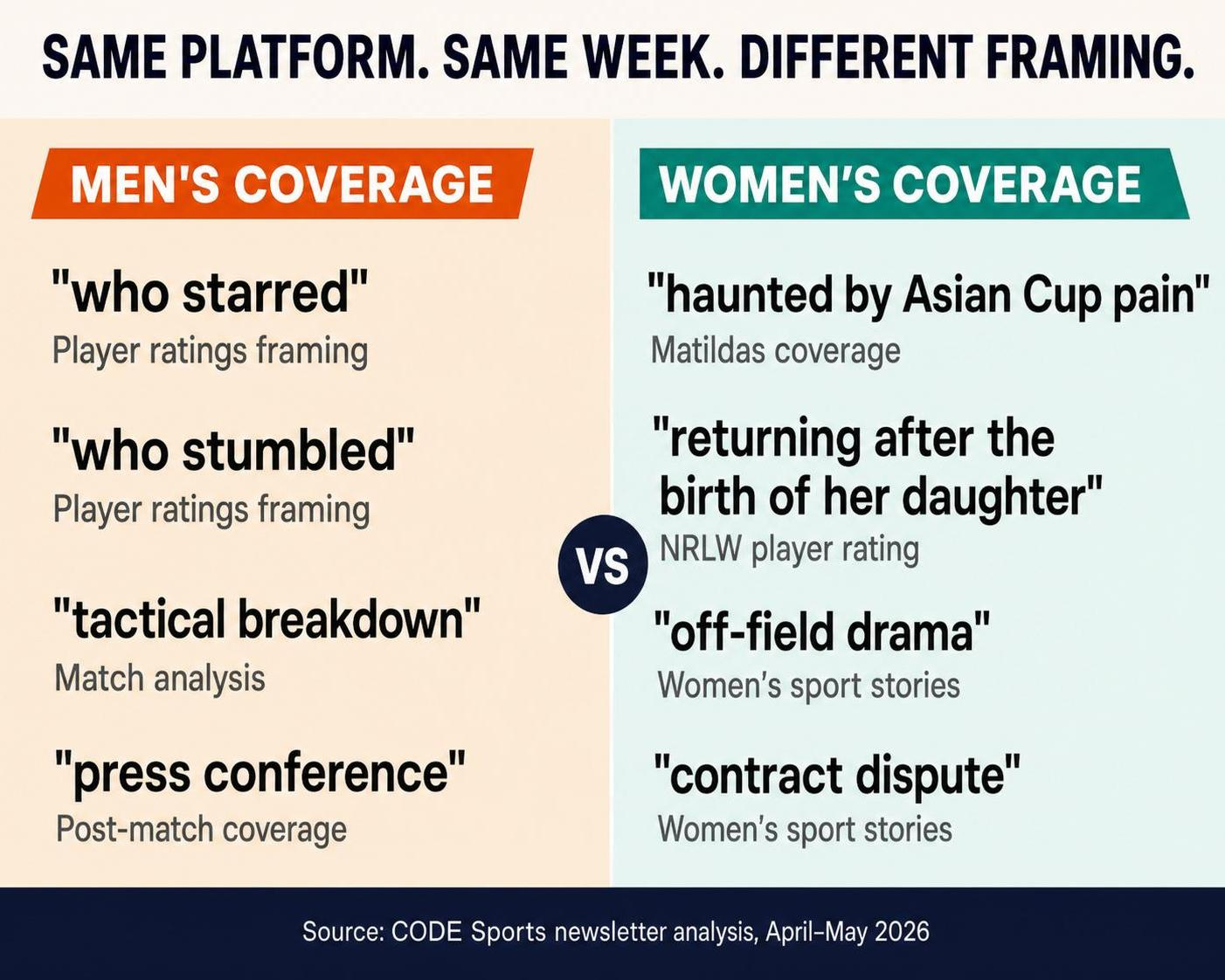
They focused on resignations, relationship breakdowns, contract disputes, body image struggles, or off-field drama. Meanwhile, men's coverage continued getting the full sports media treatment: tactical analysis, press conferences, injury updates, player form breakdowns, opinion pieces and performance scrutiny.
The language shifts too.
On the same CODE Sports page, men's player ratings were framed around "who starred" and "who stumbled."
The Matildas coverage? "The Matildas who will be haunted by Asian Cup pain."
Men get performance framing. Women still often get framed emotionally instead of competitively. Even when the performances themselves warrant serious sporting analysis.
ABOVE: CODE Sports email burying NRLW coverage near the bottom of the page.
No feature placement, no visual priority, just another link buried down the scroll.
Women’s sport doesn't have a performance problem. It doesn't have an audience problem either. Commercially, the numbers are increasingly hard to argue with. Eighty-six percent of women's sport sponsors report that their investment met or exceeded expectations. The momentum is real.
But the media still shapes visibility. It often dictates what matters and what gets analysed seriously. It influences what gets amplified online and what gets remembered. Critically, it also has a bearing on where young girls imagine sport can take them. That really matters.
When women's sport keeps delivering major audiences and still gets treated like a side story, the message is clear: no matter how well the women perform, the men's game remains the main event.
When the media keeps reinforcing that hierarchy, it doesn't just influence headlines.
It influences funding, visibility, sponsorship, credibility, and whether the next generation of girls grows up believing their sport truly matters.
Perhaps the most insidious part is that it slips in almost under the radar, through framing, omission, tone, and the steady drip-feed of coverage that asks audiences who are reading about women's sport to admire or judge them for everything except the sport itself.